Most companies today invest seriously in cybersecurity: MFA, endpoint detection, phishing simulations, employee training, security audits. The list keeps growing.
And yet incidents still happen. To well-prepared companies. To companies with mature security programs. To companies that did everything right.
Why?
Because cybersecurity reduces risk. It does not remove it.
That gap between reduced risk and zero risk is exactly where cyber insurance lives. And in 2026, that gap is bigger and more dangerous than most organizations realize.
The Problem With “Good Enough” Security
There’s a common belief in boardrooms and IT departments alike. It sounds reasonable. It goes something like this: if our security is strong enough, we don’t really need cyber insurance.
That belief is wrong.
Modern cyber threats don’t just target your technology. They target your people. Your suppliers. Your processes. Your trust.
No security tool prevents an employee from being manipulated by someone pretending to be the CEO. No firewall stops a compromised supplier from becoming an entry point into your systems. No patch fixes human psychology.
This is the reality of residual risk. You can do everything right and still face a serious incident. The question isn’t whether it happens. It’s what happens next.
The Outsourced IT Illusion
One of the most persistent misconceptions in the market is this: “We have outsourced IT, so we’re safe from cyber incidents.”
Outsourced IT means someone else manages your infrastructure. It does not mean someone else carries your risk.
If your systems go down, your data gets leaked, or your operations grind to a halt, the financial and legal consequences land on you. Not your IT provider. Your contracts with them rarely cover business interruption losses, regulatory fines, or third-party liability claims. And even if they do, the amounts are almost never enough.
Outsourcing IT is a management decision. It is not a risk transfer. The provider manages your systems, but they don’t lose customers when those systems go down. They don’t face your regulators. They don’t answer to your board. Companies that confuse the two often discover the difference at the worst possible moment: when an incident has already occurred and no one is sure who is responsible for what.
And it’s not always an external attacker. A privileged user with legitimate access to sensitive systems leaves the company, and their credentials aren’t revoked in time. Or they share access out of convenience. Or they make a decision under pressure that they shouldn’t have. No hacker required. The risk was already inside.
This is why we advise clients to look carefully at who they work with when engaging third parties. Do they take their own security responsibilities seriously? Do they have a cyber insurance policy? A vendor that can’t answer those questions confidently is a risk that lands on you, not them.
Social Engineering: The Threat That Keeps Evolving
If there’s one area that keeps cybersecurity professionals up at night, it’s social engineering.
Attackers are no longer just targeting systems. They’re targeting people. And they’re getting dramatically better at it.
Today, Ransomware-as-a-Service has made sophisticated attacks available to almost anyone. The tools are cheap. The barrier to entry is low. You don’t need to be a skilled hacker to launch a damaging attack. You just need to rent the right kit online.
How Attackers Are Getting In
AI-generated phishing emails now match the writing style of real internal communications with frightening accuracy. Business Email Compromise (BEC) takes it further: attackers don’t just imitate a style, they hijack or spoof a real email account and conduct entire conversations before anyone suspects a thing. Smishing brings the same tactics to SMS, where people are even less guarded than with email. Voice cloning reproduces the voice of an executive from minutes of publicly available audio. A phone call from the “CEO” asking for an urgent transfer is almost impossible to verify in the moment. Deepfake video has become a tool of choice for organized criminal groups. No longer experimental, no longer rare.
And it doesn’t always require sophisticated technology. An attacker sends a company-wide email, spoofed to look like it came from the CEO. Subject line: “Bonus payments” or “Salary update.” Every single person in the company will open it. That’s not a security failure, that’s human nature. And attackers know exactly how to exploit it.
These attacks succeed not because security controls fail. They succeed because they’re designed to go around them entirely. The technology worked perfectly. The MFA was configured correctly. The phishing filter was running. And the attack still succeeded, because a human being was convinced it was legitimate.
No amount of technical investment fully solves this. You can reduce exposure through training, through dual-authorization requirements on high-value transactions, through a culture that empowers employees to question unusual requests. But you cannot eliminate it. Training helps. Process controls help. The residual risk remains real, and it’s significant.
Cyber Incidents Are Never Just IT Problems
Here’s something that surprises many organizations when they experience their first serious incident. It doesn’t stay in IT.
What starts as a compromised account or a successful phishing attempt can cascade into something that touches every part of the business. Often within hours.
The Blast Radius of a Cyber Incident
- For a manufacturer: a ransomware attack stops production lines. Deliveries are missed. Contracts are breached. Supply chain partners are affected.
- For a hospital: a system outage delays surgeries. People wait for care that can’t be delivered. Regulatory investigations follow.
- For a law firm: a data breach exposes client information. Contractual liability kicks in. Mandatory notifications go out. Legal costs mount fast.
- For a software or cloud provider: a DDoS attack takes services offline. Customers can’t access what they’re paying for. Every hour of downtime breaches SLA commitments, and in an industry built on trust, reputational damage hits fast and stays long.
The direct costs (forensics, system recovery, ransom payments) are often the smaller part of the total bill. Business interruption losses, regulatory fines, third-party liability, and crisis communications can dwarf them. This is what cyber insurance addresses. Not the breach itself. The avalanche of consequences that follows.
The First Hour Decides Everything
Experienced cyber claims professionals will tell you something that most organizations learn the hard way. The decisions made in the first hour after an incident is detected determine how expensive it gets. Not the attack. The response.
Under pressure, adrenaline running, panic setting in, phones ringing from every direction, organizations make understandable mistakes. An infected server gets shut down without preserving forensic images, destroying the evidence needed to understand what happened. An all-staff email goes out before the scope of the breach is understood, alerting attackers who still have access. Two days pass while the team tries to resolve things internally, giving attackers 48 more hours to move through the network.
This is where cyber insurance delivers value far beyond financial reimbursement. Cyber policies include access to 24/7 incident response teams, forensic specialists, legal advisors, crisis communications professionals, and ransomware negotiation experts.
Cyber insurance today is a proactive tool. It’s not just there to pay out after the damage is done. It’s there to help you respond faster, limit the damage, and get back to normal operations as quickly as possible. It’s not a silver bullet, and it’s not magic. But it is an extra layer of protection that kicks in exactly when everything else is falling apart.
This Is a Board-Level Responsibility
Protecting an organization’s digital assets is not just an IT concern. It’s a board responsibility.
Directors and executives are accountable for risk management, and cyber risk is no exception. They don’t need to understand every technical detail. But they do need to understand that ignoring this risk is itself a decision. One they own.
So the question is worth asking directly: are they genuinely willing to take that risk? Are they prepared to stand behind the claim that a cyber incident is too unlikely to plan for, and that no employee will ever click on the wrong email?
Because if something goes wrong, that’s exactly the position they’ll have to defend.
Cyber insurance is one of the tools available to a board that takes this responsibility seriously. Not the only tool. But an important one.
Why Broker Education Has Never Mattered More
The role of the insurance broker in cyber risk is changing fast. A few years ago, brokers were expected to advise on policy wording and pricing. That was enough. It isn’t anymore.
Clients today are dealing with threats that didn’t exist five years ago. AI-powered social engineering. Deepfake fraud. Ransomware groups with professional negotiation teams. Supply chain attacks that spread from a single compromised vendor to dozens of their clients.
Understanding these threats requires more than insurance knowledge. It requires understanding how incidents actually unfold, how ransomware negotiations work, why response timing matters, how business interruption losses are calculated, and what can go wrong during a forensic investigation.
The Broker Who Speaks Both Languages
Brokers who can speak both insurance and incident response become genuinely valuable to their clients. Not just at renewal, but when things go wrong and someone needs to know exactly what to do next. That kind of guidance only comes from people who have taken the time to understand what they’re actually advising on.
And in a field that changes as fast as cyber, that understanding can’t be a one-time effort. New attack techniques emerge constantly. Policies evolve. What was standard coverage two years ago may have significant gaps today. Continuous education isn’t optional. It’s the baseline for anyone advising on cyber risk.
A good broker’s job is to make the client aware that this risk exists, and that it can be transferred to an insurer. After that, the decision belongs to the client. They can transfer it, consciously accept it as a business risk, or ignore it entirely. But they should make that choice with full information, not by accident.
Because cyber insurance is not a cost. It’s risk management. It’s the kind of policy you negotiate carefully, pay for every year, and genuinely hope you never have to use.
Two Layers, One Strategy
Cybersecurity and cyber insurance don’t compete with each other. One doesn’t replace the other. Security controls reduce the likelihood of an incident and limit its impact when one occurs. Cyber insurance is the additional layer that covers the financial and operational fallout when those controls aren’t enough, which, at some point, they won’t be.
An organization with strong security but no insurance is betting everything on its defenses being perfect. That’s not risk management. That’s wishful thinking.
Invest in the best security controls your resources allow. Understand what residual risk remains. Get coverage that addresses it. And make sure the people who would need to activate that coverage in a crisis know how to do it before the crisis arrives.
Stop Hoping. Start Preparing.
The cyber threat environment in 2026 is not getting simpler. AI is making social engineering more scalable and more convincing. Ransomware tools are cheaper and more accessible than ever. Regulatory requirements around data protection are tightening across every major jurisdiction.
The organizations that come through serious incidents with the least damage aren’t necessarily the ones with the best firewalls. They’re the ones that prepared for what happens when the firewall isn’t enough.
Your security stack matters. Your training matters. Your monitoring matters. So does having a cyber insurance policy you actually understand, and knowing exactly how to use it before you need to.
Cyber risk isn’t a future problem. It’s a present one. The attackers have already decided they’re coming. The only difference between companies that recover fast and companies that don’t is preparation. Not luck. Not better technology. Preparation, and the decision to take risk seriously before it takes you.
About the Contributor
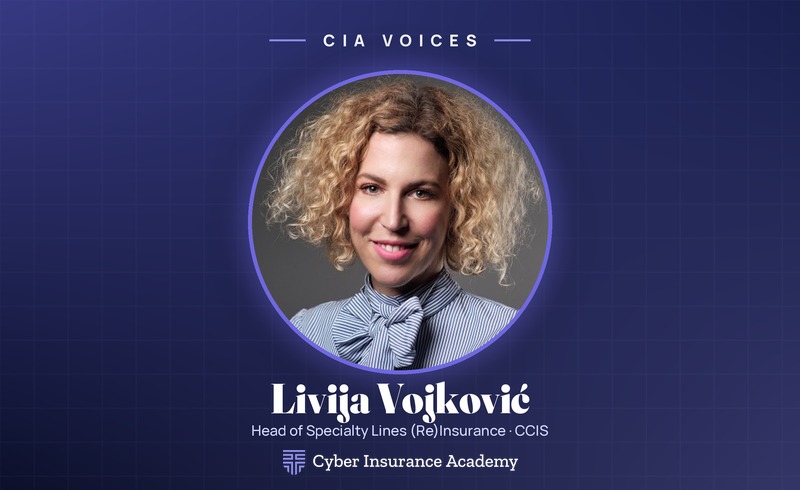
Livija is Head of Specialty Lines (Re)Insurance and a Certified Cyber Insurance Specialist (CCIS), an experienced (re)insurance broker delivering strategic solutions for corporate clients across all lines of business. She brings deep expertise in cyber, Directors and Officers liability, commercial crime, intellectual property, transactional risk, and professional indemnity, supporting businesses in transferring and managing risk to (re)insurers through complex master and layered programs.
Committed to continuous professional development, she has completed every Cyber Insurance Academy course to date. She delivers thought leadership and in-depth analysis on cyber risk and emerging threats, bridging technical and insurance perspectives to translate complexity into practical, actionable insight across the cyber risk landscape.