



In today’s cyber market, the gap between a transactional producer and a high-performance cyber insurance broker is widening rapidly. For carriers and underwriters, this gap directly impacts risk quality, loss predictability, and portfolio stability.
As the market moves away from the habits of the soft-market era, a clearer standard is emerging for what a professional cyber insurance broker must deliver. The role has evolved from placement-focused intermediary to active participant in risk assessment, risk improvement, and claims outcomes.
Below is the profile of a “good” cyber insurance broker in the current ecosystem.
The Technical Translator
A modern cyber insurance broker no longer operates on the periphery of technical conversations. Instead, they function as a critical bridge between a client’s security leadership (CISO, IT, risk teams) and a carrier’s underwriting function.
Rather than simply collecting proposal forms, a good cyber insurance broker actively interrogates them.
They understand network architectures well enough to challenge client responses, identify inconsistencies, and address gaps before an application reaches an underwriter’s desk.
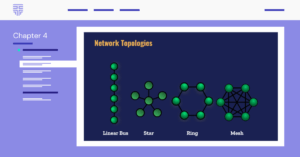
Chapter 8 of the CCIS Designation Program teaches cyber insurance brokers how underwriters interpret proposal forms, where risk signals hide, and how to prevent avoidable friction in the quoting process. Learn more about the CCIS Program.
Narrative construction is key. Raw security data must be translated into underwriting-relevant language. When controls are missing or partially implemented, the broker proactively explains compensating controls, architectural intent, and risk context. This reduces friction, shortens underwriting cycles, and limits unnecessary back-and-forth during the quoting process.
The Architect of Submission Quality
For underwriters, a “good” cyber insurance broker is immediately recognizable by the quality and consistency of their submissions.
High-fidelity, transparent applications lead to faster bind times, fewer coverage disputes, and more accurate pricing.
Strong brokers verify the reality behind key controls such as MFA deployment, endpoint detection and response (EDR), and backup segmentation. This pre-validation improves submission-to-quote ratios and builds long-term trust with carrier partners.
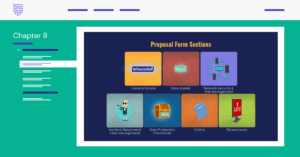
Chapter 8 of the CCIS Designation Program teaches cyber insurance brokers how underwriters interpret proposal forms, where risk signals hide, and how to prevent avoidable friction in the quoting process. Learn more about the CCIS Program.
An effective cyber insurance broker also uses claims data and market intelligence to explain why certain limits, retentions, or exclusions are being applied. Instead of framing outcomes as pricing problems, they position them as risk-aligned decisions grounded in loss experience.
Manager of the Total Cost of Risk
The most effective cyber insurance brokers understand that insurance is only one component of organizational resilience. Their role extends beyond policy placement into optimizing the client’s broader cyber risk spend.
What does this look like in reality?
Carriers increasingly provide value-added services such as threat intelligence, vulnerability scanning, and employee training. A good broker maps these offerings against the client’s existing security investments to identify overlap and inefficiencies.
By eliminating redundant tools or services, the broker helps clients reallocate budget toward controls that materially improve insurability. This creates a virtuous cycle: better controls lead to stronger underwriting outcomes, which in turn improve pricing and coverage terms.
The “Day Zero” Claims Advocate
The true value of a cyber insurance broker is often revealed in the first 24–48 hours of a cyber incident.
A good broker ensures that a breach is not the first time a client interacts with their insurer’s response ecosystem. They work with clients to ensure internal incident response plans are aligned with carrier panel requirements, notification timelines, and claims protocols before an event occurs.
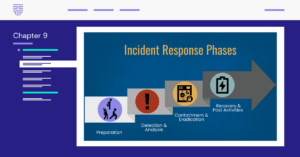
Chapter 9 of the CCIS Designation Program equips cyber insurance brokers to understand IR workflows, carrier panel requirements, and claims-critical timelines – so they can guide clients confidently in the first 48 hours of an incident. Learn more about the CCIS Program.
During a claim, the broker plays an active role in managing communication between the insured and the carrier. This reduces misunderstandings, limits disputes, and helps avoid the breakdowns that lead to litigation and damaged relationships.
Raising the Bar for the Cyber Insurance Broker
The “good” cyber insurance broker is no longer a generalist who happens to sell cyber coverage. They are a specialist who understands that their role directly influences underwriting outcomes, claims severity, and the long-term sustainability of the market.
By combining technical fluency, high-quality submissions, proactive risk management, and early claims advocacy, today’s leading cyber insurance brokers are helping shape a more resilient and sustainable cyber insurance ecosystem – and defining what excellence looks like for the next decade.
The skills that define a high-performing cyber insurance broker are learned, not assumed.
The CCIS course is designed to build the technical fluency, underwriting awareness, and claims readiness that today’s cyber market demands.
→ Explore the CCIS course and see how brokers are raising the standard