



Cyber coverage is often seen as a nice-to-have rather than a critical risk tool, and that perception, according to Jay Vinda, Global CISO and Cyber Risk Engineering Lead at Mosaic Insurance, is holding the market back. Speaking from a CISO’s perspective at the CIA Cyber Insurance Bootcamp 2025, Vinda highlighted the persistent barriers that stop organizations from fully embracing cyber insruance and how the industry could rethink its approach.
The Three Barriers to Cyber Coverage
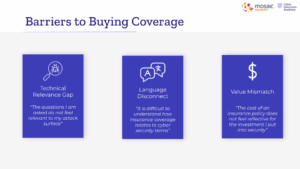
Vinda distilled CISO frustrations into three recurring challenges:
- Technical relevance: Brokers and underwriters often ask questions that don’t reflect the realities of an organization’s attack surface.
- Language disconnect: Insurance terminology doesn’t always translate to cybersecurity, making it hard for CISOs to connect coverage with controls.
- Value mismatch: Premiums rarely reflect the level of security investment already made, leaving organizations unsure of the tangible benefits.
Bridging the Gap Between CISOs and Cyber Coverage
When it comes to cyber coverage, Vinda explained that insurers typically view cyber threats through the lens of financial loss: ransomware equates to business interruption; stolen data triggers breach response costs; and downstream effects result in third-party liability. CISOs, however, see attacks through the prism of controls and threat vectors: email compromise, privilege escalation, endpoint gaps, and lateral movement.
“Our industry doesn’t always connect business impact back to cyber controls,” Vinda noted. “Aligning terminology and risk frameworks can close both the technical and language gaps at once.”
A New Paradigm for Cyber Coverage
Bridging the language, technical, and value gaps in cyber coverage requires collaboration between CISOs and insurers. “When we align terminology, focus on relevant controls, and ensure measurable risk reduction, we transform the perception of cyber insurance,” Vinda said. “That’s how we bridge the gap.”
By connecting coverage to real controls and providing demonstrable risk reduction, cyber insurance can evolve from a perceived cost center into a core pillar of organizational resilience.
Jay Vinda’s session took place at the 2025 Cyber Insurance Bootcamp. It brought together top industry minds for an intensive, no-nonsense learning experience focused on the trends that will shape cyber risk in 2026.